I’ve set up more inflatable play structures than I can count, from tiny toddler bounce house rentals tucked into shady corners to towering combo units with slides that make teenagers squeal. No two events are the same, yet the core questions repeat: Is it safe? Will it fit? What does it cost? And how do I avoid last‑minute headaches? This guide walks through the choices and trade‑offs that actually matter when you’re booking jump house rentals, with the kind of detail you only pick up by hauling blowers, sandbags, and a hundred feet of extension cords at dawn.
Start with your guests, not the gear
Before you type “bounce house rental near me” into your browser, get clear on who will be using it and what you want the inflatable to do. A backyard bounce house built for kids ages 3 to 8 moves very differently from a large obstacle course inflatables setup meant for teens and adults. If the guest list skews young, softer floors, lower walls, and lower step heights matter more than flashy add‑ons. If you’re hosting a mixed‑age group, a combo bounce house rental with a short slide, a basketball hoop, and a medium‑sized jumping surface can keep a lot of attention without forcing the smallest kids to wait in line behind the big kids.
Space also dictates the experience. A 13 by 13 inflatable bounce house fits into many suburban yards with room to spare, while a 30‑foot obstacle course or dual‑lane inflatable slide rentals eat yard space and require wider access gates. If you only have a narrow side yard, you may need to skip the event inflatable rentals that arrive on heavy dollies and choose a lighter unit that can be carried by two crew members.
Rough ranges help frame decisions. A standard backyard bounce house typically handles 6 to 8 little kids at once, a mid‑size combo handles 6 to 10 depending on age distribution, and a large obstacle course can handle a steady flow of two to four at a time, though throughput is higher because participants move through rather than stay put. It’s more efficient to book two smaller units than one massive unit if your guest list is large, because you avoid bottlenecks and keep line time short.
What to rent: matching units to events
Most inflatable rentals fall into predictable categories, and each has its own sweet spot.
Classic jump houses, also called castle or modular units, are the all‑rounders. They set up quickly, cost less than themed or combo units, and perform well for kids 3 to 10. If your yard is tight or your budget is tighter, these make sense. They have fewer friction points in setup and take power easily from a standard 15 amp circuit.
Combo bounce house rental units add a slide, sometimes a climbing wall, and often a basketball hoop. The extra features stretch the age range, which is why they’re popular for birthday party inflatables when cousins range from toddler to tween. Expect these to need more clearance in length because the slide extends beyond the jumping square. Many come in wet or dry versions, so they double as inflatable slide rentals with a small splash pad when you add water. Water adds fun, but also risk and mess, which I’ll cover in the safety section.
Obstacle course inflatables deliver a competitive streak. They include crawl‑throughs, pop‑ups, tunnels, and slides. These shine at school carnivals, block parties, and company picnics, where you want throughput and spectacle. They usually require two blowers and draw more power. Setup time is longer. They also chew up space and need a reasonably flat footprint, as mis‑leveling can create pinch points or sagging.
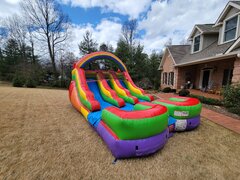
Standalone inflatable slide rentals make a backyard look like a camp for the day. Dry slides are simpler, wet slides demand water and a drainage plan. I’ve seen wet slides flood a flower bed in an hour, so pay attention to where the splash lands and how it drains. On grass, a wet slide can leave a muddy trough if participants queue with wet feet. Some operators carry turf protectors for high‑traffic zones. Ask.
Toddler bounce house rentals look pint‑sized for a reason: small kids get overwhelmed in full‑size inflatables, and bigger kids landing nearby can topple them. Toddler units have lower walls, gentler ramps, and broader steps. They also keep parents happier because they can easily spot their child. If your party centers on two‑ to five‑year‑olds, a toddler unit plus a bubble machine or a small foam pit beats a giant slide they won’t touch.
Inflatable party packages bundle multiple units and extras like concession machines, generators, attendants, or yard games. The bundle price often beats booking a la carte, especially for event inflatable rentals that need onsite staff. If you’re eyeing a package, study what’s actually included. Sometimes the price looks better because it excludes delivery distance or setup on hard surfaces.
Site scouting: will it fit, and will it be safe?
Measuring a site in person solves most problems before they grow expensive. A measuring tape and a level app on your phone are enough. Confirm three dimensions: footprint, vertical clearance, and access path.
Footprint means more than just length and width of the unit. Add safety clearance, usually 3 to 5 feet around the perimeter so the inflatable can flex, anchors can set, and kids can exit without crowding a fence. Stakes, sandbags, or water barrels need space too. For a 13 by 13 unit, a 16 by 16 area is my minimum, 18 by 18 feels better.
Vertical clearance is often forgotten. Low tree branches, overhead lines, pergolas, and even string lights can snag or tear vinyl. A standard bounce house runs around 13 to 15 feet high at the peak. Slides and combos run taller, sometimes 16 to 20 feet. You want a clean vault above, not just a gap.
Access path matters for delivery. Most crews bring units on a dolly. A 36‑inch gate is a safe threshold for most standard inflatables. Narrower gates force hard lifts or are a hard stop. Steps complicate things. One or two steps can be negotiated with extra muscle. A long run of steps with turns may rule out heavier units. If access is tight, photograph it and send dimensions to the company before you book.
Surfaces change your anchoring plan. On grass, 18 to 24‑inch stakes provide excellent holding power when the soil is healthy. On asphalt or concrete, sandbags or water barrels do the job, but the number is not arbitrary. For a classic unit, I bring at least 8 sandbags weighing 40 to 50 pounds each. For a combo or slide, double that. Wind exposure, building eddies, and elevation change the math. If the surface is pavers, protect them with pads before placing weights.
Slope kills joy. If the site drops more than about 3 inches over the width of a standard unit, the floor will slant enough to throw children off balance and stress seams. Obstacle courses exaggerate slope. Use the level app. If you see more than 2 degrees across the setup area, ask the operator to assess alternatives.
Power and air: the quiet workhorses
Inflatables are simple in concept. A blower pulls air through a tube, and the structure leaks by design so it stays pressurized but soft. The devil sits in power and airflow.
A standard 1.0 to 1.5 horsepower blower draws 7 to 12 amps at startup and a bit less when running. A single 15 amp circuit can handle one blower and nothing else. Once you add a second blower or a concession machine, you need either a second circuit or a generator. Tripped breakers ruin parties. I ask clients to identify two separate outdoor outlets that don’t share a circuit. If they can’t, I bring a quiet generator rated at 3000 watts or more for two blowers.
Extension cords should be 12 gauge, not the skinny orange cords sold for string lights. Anything longer than 75 feet drops voltage enough to shorten blower life and weaken the inflatable. Heat is the hidden enemy. I’ve seen cords coil under a table, and that coil acts like a heater. Stretch cords fully and keep them dry. If your event is public, tape or cover cords to prevent trip hazards.
Airflow must stay unblocked. The intake on a blower should sit a few inches off the ground and be clear of leaves, plastic bags, and grass clippings. The exhaust tube that feeds the inflatable must be cinched tight with strap and buckle, not a knot. Check that the zipper on the inflatable is fully closed. A half‑open zipper reduces pressure, making walls sag and slides slow.
Safety that isn’t negotiable
A bounce house is safe when it’s anchored, supervised, and matched to the user’s size. That sounds obvious, but the failures I see come from cutting corners when things get busy.
Anchoring holds everything together once the wind picks up. If stakes are permitted, they should be driven vertically, not at an angle, and buried to the head. Each corner and each t‑joint needs an anchor point. If you’re on hard surfaces, weights must be heavy enough, positioned at the correct angle, and secured to welded D‑rings, not decorative handles. Tie‑down straps should sit tight, checked again after the first 15 minutes as vinyl warms and stretches.
Weather calls matter. Most reputable companies follow a wind cutoff between 15 and 20 miles per hour for standard units and even lower for tall slides. Gusts are what tip units, not the steady wind. A hand‑held anemometer costs little and resolves arguments. If gusts climb, you deflate and wait. Rain in itself isn’t the problem, but wet vinyl becomes slippery, and lightning changes the equation. During a brief shower, you can leave the blower on and cover the intake to keep water out, then towel the unit dry before letting kids back on.
Supervision keeps rules real. I prefer to station a sober, phone‑free adult within arm’s reach of the entrance. That person controls flow, checks socks for mud, and keeps bigger kids from bouncing with toddlers. Collisions cause more injuries than falls. Set participant counts by age and size, not a fixed number. For a 13 by 13 unit, I allow up to 6 small children or up to 4 preteens at a time. For a combo, similar numbers apply because the slide and ladder concentrate traffic at chokepoints. Only one slider at a time, wait until the landing clears.
Clothing and accessories create hazards you can actually see. No sharp objects, obvious. Less obvious: remove glasses unless they’re sport strapped, tuck necklaces, and ban chewable jewelry which can snap and become a choking risk. Face paint is fine if it’s dry, but glitter transfers to vinyl and stays forever. Water units add another rule: no cotton socks, as they grip and twist ankles on wet vinyl.
Food, drinks, and gum belong outside the inflatable. I’ve scrubbed sticky juice off seams that never looked the same. Spills aren’t just messy, they’re fall hazards. Post a small table for water and snacks within sight of the entrance so kids refuel without sneaking bottles inside.
How setup really works on the day
The best crews make it look effortless. It isn’t. A reliable operator arrives early enough to walk the site, confirm placement, and adjust their plan. If the ground is wet, they lay tarps before unrolling vinyl. Tarps matter, not just to keep the unit clean, but to reduce friction that rubs pinholes in the base.
Once placed, the inflatable unrolls and unzips go closed. Blower placement follows the prevailing wind and the nearest power source. They keep a clear path around the blower both for airflow and for safety. The unit inflates in 1 to 3 minutes for a standard bounce house, 3 to 5 minutes for big slides. Anchoring happens at full inflation so straps set to the right tension. A quick inspection checks seams, netting, and that the step and landing mats are positioned.
Rules should be explained in simple language before kids jump. The best attendants crouch to eye level and make it a game: two feet only, no flips, wait for a high five before entering, slide seated with feet first. It’s amazing how much better kids listen when the adult sounds playful and confident.
At pickup, the deflation routine reverses. The crew unzips, presses air out, and folds the unit in thirds or quarters. If the unit got wet, they either towel dry on site or roll it loosely to be cleaned and dried at the warehouse. A reputable company doesn’t store wet vinyl for days. That’s how mildew starts, and you can smell it on the next rental.
Water play without regret
Water turns any backyard into a small amusement park. It also adds logistics. A wet slide or a wet‑dry combo needs a hose long enough to reach the top spray bar. Use a dedicated spigot with its own shutoff so you can adjust flow quickly. Low‑flow helps reduce water waste and keeps the surface slick without drenching kids. After the event, the area around the landing will be soaked. Plan where that water goes. On grass, spread traffic so you don’t create a muddy trench. On concrete, ensure drainage doesn’t flood a neighbor’s side yard or your basement well.
Slip risk increases with water. Put rubber mats or towels at exits so kids don’t sprint onto slick patio stone. Remind kids to remove wet socks before they step on smooth surfaces. For public events, caution signs and spotters near the splash zone are worth the small effort.
Remember, water units raise the bar for supervision. Younger kids struggle to climb wet ladders. If you see hesitation, station an adult at the bottom of the ladder to coach and spot. If the air temperature dips or wind picks up, kids get cold faster than they say. Rotate them off for warm‑up breaks.
Cleanliness that actually shows
Parents notice when vinyl looks tired. A clean inflatable doesn’t just shine, it smells neutral. Mild soap and water handle most dirt. Disinfectants matter too, but harsh chemicals degrade vinyl and stitching. Quaternary ammonium products labeled safe for vinyl are common in the industry. The trick is contact time. Spraying and immediately wiping does little. A two to five minute dwell followed by a wipe and a fan dry does more. Seams and netting need attention. Those are the spots kids grab, sneeze on, and press faces against.
If an operator says they clean “after every rental,” ask how and where. Sincere answers include tarps, shop vacs for debris, pump sprayers for sanitizer, and fans in a drying bay. A vague answer like “we wipe it down on the truck” suggests corners might be cut on busy days. Cleanliness correlates with overall professionalism more than any other single detail I’ve seen.
Pricing, deposits, and how to save real money
People ask me what a fair price is for inflatable rentals. The honest answer is, it depends on your market, the day of the week, and the unit type. In many metro areas, a standard backyard bounce house runs 120 to 220 dollars for a day. A combo might be 220 to 350. Large inflatable slide rentals and obstacle course inflatables often land between 350 and 700, sometimes higher for very tall slides or multi‑piece courses. Holiday weekends command premiums.
Delivery fees vary. Some companies include delivery within a radius, say inflatable rentals near me 10 to 20 miles. Beyond that, expect per‑mile charges. Setup on hard surfaces may incur an anchoring fee because sandbags or water barrels require extra labor. Stairs or long carries sometimes add a handling charge. Generators are an add‑on, usually 70 to 150 dollars depending on size and fuel.
Deposits lock in your date. A 25 to 50 percent deposit is typical, refundable up to a cutoff tied to weather policies. The best operators offer a weather credit if winds or lightning force a cancellation. Credit beats a partial refund when you know you’ll host another event.
To save without sacrificing safety, timing and bundling help. Midweek rates and Sunday afternoon returns often cost less. Off‑season months, depending on your climate, come with lower demand and friendlier deals. Inflatable party packages that combine a combo unit, a small game, and a concession can shave 10 to 20 percent. You can also save by confirming that you can provide two separate circuits and a level grass area, avoiding generator and hard‑surface fees.
If budget is tight, choose one great piece rather than two mediocre ones. A single well‑placed combo with a clear set of play rules entertains more consistently than a clutter of small items that divide attention and supervision.
Reading the operator, not just the website
Websites look similar across the industry. You learn more in five minutes on the phone than in twenty minutes clicking galleries. I listen for operators who ask questions about my space, my power, my guest ages, and my schedule. That shows they care about a smooth day. I also ask what happens if high winds arrive. Clear policies indicate experience.
Insurance matters. Ask for a certificate of insurance if you’re hosting at a park, school, or venue. Even for backyard bounce house setups, I feel better when the company carries general liability with adequate limits. A company that dodges the question or says “we don’t need it” gets a pass from me.
Gear tells a story. Worn vinyl happens, but broken netting or frayed straps are red flags. Crews that carry extra stakes, straps, and a spare blower read as professional. They fix small problems on site rather than rescheduling your event.
Reviews help but look for patterns rather than perfection. Any operator will have a few tough days in peak season. If every negative review mentions late arrivals and poor communication, believe it. If the replies are defensive, that’s a cultural tell.
Common mistakes I still see, and how to dodge them
The most frequent misstep is renting a unit too large for the space. It’s tempting to go big, but a big unit wedged into a tight yard with poor circulation creates stress and hazards. A slightly smaller unit with room to move feels bigger in practice.
Underestimating power is next. As soon as someone plugs a margarita machine into the same circuit as the blower, everything stops. If you need to ask whether two outlets are on the same circuit, assume they are and plan for a generator.
Mixing ages without a plan causes chaos. Set time windows or create two attractions, one for little kids and one for older kids. A toddler bounce house rentals unit beside a larger combo works beautifully, with a parent stationed at each.
Ignoring wind because “it’s just a breeze” ends badly. Gusts arrive without warning. If the entrance banner ripples constantly or the tops of trees sway, you’re flirting with the limit. Better to deflate, serve cake, and wait ten minutes than to regret it.
Leaving the unit unattended during pickup leads to lost items and disputes. Assign someone to walk the unit with the crew. They’ll find socks, phones, and the occasional stuffed animal, and you’ll verify that the area is left clean.
Backyard case notes: three real setups that worked
A fourth‑birthday brunch party in a small yard. We chose a 13 by 13 pastel unit, tucked under a set of high oak limbs but well away from branches. The access gate was 38 inches, easy for the dolly. I anchored with 18‑inch stakes and added two sandbags to the windy corner after feeling gusts pick up before noon. Play rotated in 10‑minute blocks, with a bubble station for the kids sitting out. Zero tears, minimal scuffs, lots of photos.
A neighborhood block party on a cul‑de‑sac. Space was plentiful, power was not. The organizer thought one outlet would suffice for an obstacle course and a snow‑cone machine. We brought a 3500‑watt inverter generator, placed on rubber feet behind a parked car to dampen sound. The obstacle course drew a healthy line, but throughput was excellent. An adult volunteer kept racers moving and cleared the slide lane when kids froze at the top. We burned 2 gallons of fuel in five hours.
A summer backyard bash with a wet‑dry combo. The host wanted water but had a delicate lawn. We used tarps at the entrance and along the slide exit to shepherd runoff toward a gravel side yard. The spray bar ran at half flow, enough to keep the slide slick. After four hours, the grass around the landing was damp but intact. We left the blower on while we wiped and towel dried to avoid rolling a soaked unit, reducing mildew risk back at the shop.
Where “near me” actually matters
Typing bounce house rental near me yields pages of results, but proximity affects more than delivery fee. A local operator knows wind patterns in your neighborhood, the quirks of city parks’ power pedestals, and which streets swallow trucks with low branches. If your event is at a park or school, they might already be on the venue’s approved vendor list. That saves paperwork and headaches. For private backyards, a nearby crew can respond quickly if a blower fails or you need extra weights because a breeze picks up. Speed beats savings if a problem pops up on a busy Saturday.
That said, don’t overpay just for a short drive. Balance proximity with professionalism. A slightly farther company that answers the phone, shows up with clean gear, and brings spare parts is worth the price.
Insurance, permits, and venues that watch the details
Public venues often require proof of insurance and sometimes a permit for inflatables. Parks departments may mandate ground protection, limit staking to protect irrigation lines, or require an attendant. Plan ahead. Some cities need a week or more to issue permits. If a venue forbids stakes, confirm the operator will bring sufficient ballast. For indoor events, confirm ceiling height and ventilation. Blowers are loud in gymnasiums, so expect more noise. Some venues require GFCI protection on all circuits. Good operators already use GFCI on wet units.
If your event falls under a school or corporate policy, ask whether the operator must be added as an additional insured or vice versa. Many operators can issue a certificate in 24 hours, but not in 24 minutes on a Saturday morning.
When to hire an attendant
For small backyard gatherings, a responsible adult can supervise a single unit. Once you add a second unit, water, or a mixed‑age crowd, paying for an attendant makes sense. At larger events, attendants manage lines, enforce height and weight guidelines, and watch for fatigue or roughhousing. They also allow your volunteers to circulate rather than stand in one spot for hours. Attendants cost anywhere from 30 to 50 dollars per hour in many markets. When you factor in fewer injuries, smoother flow, and less stress, it’s money well spent.
A simple pre‑event checklist
- Measure the setup area and access path, including height clearance and gate width. Confirm power: two separate circuits or reserve a generator if using multiple blowers. Ask the operator about anchoring on your surface and their wind policy. Plan supervision, especially for mixed ages or water use, and identify shade or rest spots. Stage cleanup supplies: towels for wet units, trash bags, and a broom for post‑party debris.
Aftercare for your yard and peace of mind
Even with careful planning, your yard will show where the party happened. Grass under a unit yellows after a few hours due to heat and lack of light. It recovers within a week. A light watering the next morning helps. If you used water, rake out any matted grass to promote airflow. Sweep up confetti, chips, and small trash before sprinklers run, or you’ll find bits scattered for days.
If anything felt off with the rental, speak up promptly. Good operators want feedback. If a blower sounded rough, if a seam looked tired, or if supervision rules weren’t clear enough, you’ll help them improve and protect the next family’s party.
Final thoughts from the field
Great inflatable events come down to respect for physics and people. Vinyl, air, and gravity don’t negotiate. Kids, on the other hand, will meet you where you set expectations. Choose the right inflatable for your space and guests. Anchor it like you mean it. Power it correctly. Watch the wind, not the clock. Keep rules short and kind. Do those things, and your kids party rentals experience will deliver the kind of laughter that parents remember and neighbors tolerate with a smile.
Whether you go with a simple backyard bounce house or a full spread of party inflatables, the best rental feels seamless. You’ll see it in the way kids queue without pushing, how the unit sits taut and steady, and how pick‑up leaves your yard tidy. If you’re scanning options for jump house rentals this season, weigh the details lightly but thoughtfully, and you’ll find the right fit.